
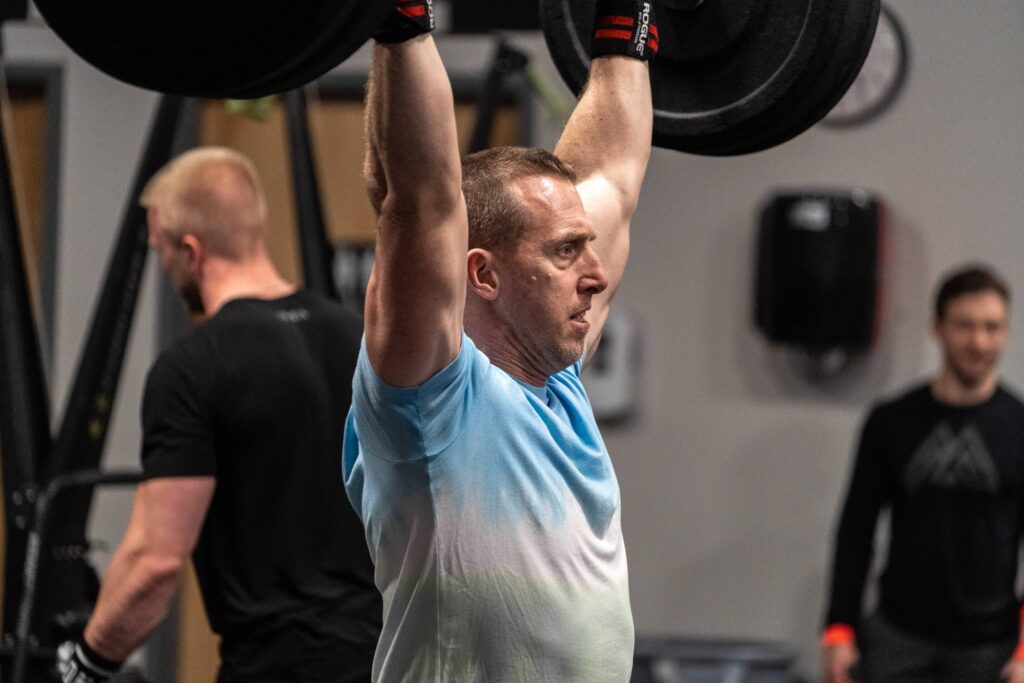
Crossfit Age Group Semifinals Prep Phase Guide – Masters and Teens Programming
Calling all Masters and Teen Crossfit athletes! Congratulations on a successful 2023 Crossfit Open, but we’re just getting started. With the start of the competition…
Context matters before we get into any of this. Because how you think about gymnastics depends entirely on what you’re trying to accomplish.
This is a conversation about the sport of CrossFit. The open, quarterfinals, semifinals, the Games. That framing shapes everything we’re about to cover. The movements we prioritize, the order we develop them in, what good actually looks like under fatigue. If you want the GPP affiliate version of this conversation, that’s a different episode. What we’re doing here is giving competitive CrossFitters a real framework for understanding and developing gymnastics so that when you open your program and see the work, you actually know what you’re building and why.
From 2021 to 2026, the CrossFit Open programmed 16 pulling movements and 5 pushing movements. That ratio isn’t an accident. Pulling gymnastics is more accessible earlier in an athlete’s development, it has a cleaner order of operations, and it builds the body awareness and movement vocabulary that everything else depends on. The ability to hang from a pull-up bar and the ability to kick upside down are not in the same zip code for most people who walk into a CrossFit gym. Pulling is where you start.
By quarterfinals the split evens out, 11 pulling movements and 10 pushing, though muscle ups blur that line depending on how you categorize them. Pressing gymnastics has a higher barrier to entry. You don’t get to kip your way through as many of the movements. The standards are stricter and harder to judge. Pulling is where the volume is, especially early in the season, and it’s where you can move the needle fastest.
The repeated open movements over the last six years: chest to bar, bar muscle up, wall walk, pull-up, toes to bar, ring muscle up.
The repeated quarterfinals movements: rope climbs, strict handstand pushup, muscle up, kipping handstand pushup, chest to wall handstand pushup.
That’s the list. That’s what we’re preparing for. Everything else in this article exists in service of those movements.
This is the part nobody wants to hear, so I’m going to say it clearly and then explain why.
There is no longer lever to pull when it comes to your gymnastics than improving your general physical preparedness.
GPP is strength and power and anaerobic capacity and aerobic capacity. It’s the idea of stealing from every style of training, combining them, and moving the needle across all of them simultaneously. And nothing is going to do more for your gymnastics than getting better at that broad picture. Not one specific drill. Not a skill session. Not time on the rings. Your GPP improving.
I know that’s frustrating to hear, especially for athletes who feel like they’re already fit. I can think of a specific type of athlete who has great aerobic capacity, good endurance, can go long and go hard, but still can’t do the gymnastics movements. And by our definition of GPP in this sport, they aren’t as fit as they think they are yet, relative to what their goals are. That’s not a knock. It’s just accurate.
If you’re going into the gym and lifting heavy, breathing heavy, doing couplets and triplets, going short, medium, and long, doing gymnastics and weightlifting and monostructural conditioning, that is the best thing you can do for your gymnastics. Full stop. After 16 years of watching athletes develop, there is no way you are truly terrible at gymnastics and excellent at everything else. The two are connected. They always have been.
A few specific things that GPP gives you that skill work alone cannot:
Strength to body weight ratio. Gymnastics is the art of moving your body through space. How much you weigh relative to how strong you are matters enormously. This improves naturally over time when you’re doing the work and paying attention to your nutrition. Bodies don’t respond well to dramatic weight changes in either direction. Patient, consistent work in both the gym and the kitchen moves the needle in a way that nothing else does.
Muscle endurance for repeated reps. This is where a lot of athletes get surprised. You get your muscle up in a controlled setting, feel great, and then find out what it’s like to do that same movement when you’re breathing heavy and your heart rate is through the roof and your grip is already taxed. GPP gives you the muscle endurance to perform multiple reps under those conditions. Your positions only exist if they hold up under fatigue. If they disappear the second your heart rate spikes, you don’t own them yet.
Grip strength. CrossFit is one of the best grip training programs that exists, and most people don’t realize it. Barbells, pull-up bars, dumbbells, kettlebells, rings, bands, rower handles, echo bike handles. You are holding onto something the entire time. The beginning of the kinetic chain for every gymnastics movement is your grip. If that breaks down, everything downstream breaks down with it.
Overhead stability. It is not safe to have significant load or body weight over your head when your body isn’t ready for it. Athletes who try to kick upside down before they have the shoulder stability to support themselves are the ones slamming into walls. The athletes doing kipping handstand pushups without the overhead range of motion to support a safe position are creating a problem, not building a skill. You earn overhead stability through showing up, being in the front rack, hanging from bars, holding positions. It accumulates.
If you take one thing from this article as a coach or as an athlete trying to get better, it’s this: be patient, pay attention to your nutrition, and trust that the GPP work is doing more for your gymnastics than any amount of targeted skill drilling on its own.
Here’s how pulling gymnastics builds from the ground up, in sequence.
We start with toes to bar and chin over bar pull-ups. Feeling good under fatigue and under volume with these two movements is the foundation everything else stands on. From there we progress to chest to bar pull-ups, then bar muscle ups, then ring muscle ups. The rope climb is an asterisk. It doesn’t fit neatly into the progression because the better you are at it, the less of a pulling gymnastics movement it actually is. Think of it as a diagnostic that runs alongside everything else.
The progression isn’t just a movement hierarchy. Each step requires more range of motion, more grip strength, more shoulder mobility and stability, and more body control than the step before it. You are not ready for bar muscle ups until your chest to bar is legitimate. You are not ready for ring muscle ups until your bar muscle up is legitimate. The sequence has logic.
Before we go movement by movement, the single most common fault across all of pulling gymnastics has to be addressed.
The grip. Pinky knuckle on top of the bar. Thumb wrapped underneath creating a closed system. It should feel like you’re almost putting your wrist on the bar. It will feel like too much. Do it anyway. Once you’re hanging, that pinky knuckle should stay pointed vertically away from the ground. This is hard to maintain under load, which is exactly why you practice it in static hangs before you introduce any movement. Do not allow yourself to practice dead hangs in a bad grip position just to extend the time. Increase the time in the right position. When you find that grip and lock into a bar, the difference is immediate and significant. Copy and paste this to every movement we cover from here forward.
Before you introduce any dynamic movement, you need to be comfortable in static positions. Dead hangs in different grips, supinated, pronated, neutral. Farmers carries. Isometric holds that build comfort, open up the tissues, and develop the positional awareness that every dynamic movement depends on. Holds are underrated almost universally.
From there we move to pulling in different planes and orientations. Pull-up variations at different body angles and resistance levels. Row variations where your foot position changes how much load your body is working against. Hand-over-hand pulls that simulate rope work. Ring rows at different angles. The full spectrum from heavily assisted to bodyweight to weighted.
This is where you find the weak points. The specific musculature that isn’t developed yet. The outside of your shoulders that lights up the first time you change your grip angle. That small muscle that’s tender to the touch 24 hours after you do a neutral grip pulldown for the first time. You can’t move the needle on what you can’t find. Varying your planes and orientations surfaces exactly what needs work, and then you address it with linear progression. A little more weight, a slightly more challenging angle, one more rep, one more day per week.
The midline runs through all of this too. If your midline breaks down under volume, it doesn’t matter how strong your lats are or how good your grip is. Everything falls apart at the hip closing movements, the toes to bar, the muscle up turnover. Midline accessory isn’t separate from gymnastics development. It’s part of the same system.
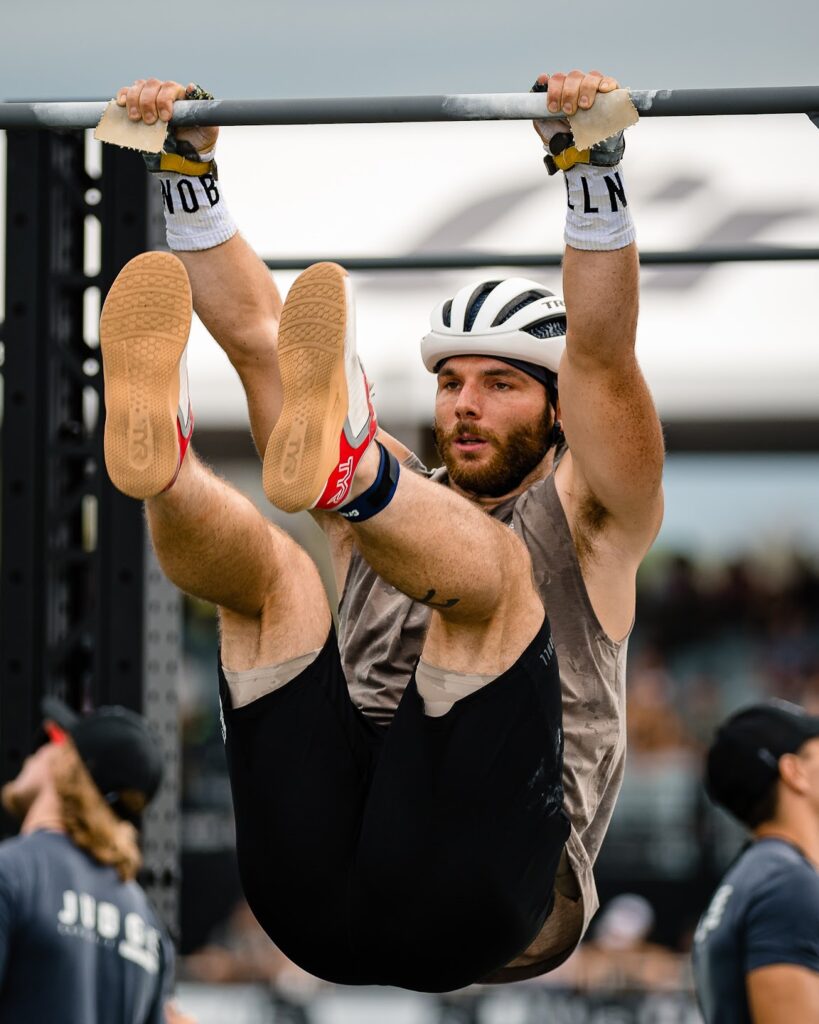
The foundation of the kip. If you cannot get into a clean hollow and arch position in your toes to bar, you are going to hit a ceiling at every stage above this in the progression.
The movement: hollow to arch, push pull with the upper body, feet all the way to the bar, and then a controlled return into a good kip position. The kick is to the bar. The return is a push with the lat to get back behind the bar with legs relatively straight, loading the swing for the next rep. That lat push is the only thing that should look like effort when someone is really good at this. Everything else looks almost effortless.
The most common intermediate fault is what I call the scoop. Athletes learn to kick correctly and then return with a knee bend instead of that lat push and straight leg return. The hip flexors do all the work on the return instead of the athlete using momentum correctly. Related to this is a loss of tension somewhere in the rep, usually in the backswing. Bent knees coming back through, breaking the engagement the swing depends on.
The advanced fault is the pike. Keeping the legs straight the entire time rather than knee-to-chest-then-kick. Athletes with strong hip flexors or a gymnastics background tend toward this. At certain levels you pick your battles. But if hip flexors are your limiting factor, there’s a ceiling that technique will never break through.
Athletes who struggle with toes to bar almost universally look like they’re trying too hard throughout the entire rep. Chaos and desperation are a signal. The issue is usually tension in the wrong places, not a lack of effort.
The progression from chin over bar to chest to bar is a range of motion conversation.
How far in front of the bar are you in your arch? How far behind it in your hollow? That distance increases from chin over bar to chest to bar, and it increases again at the bar muscle up. Every step up the ladder demands more range of motion from the shoulder, more mobility, more stability, more grip.
On chest to bar specifically, the most important fault to address is elbow position. We want a relatively straight line from wrist to elbow to shoulder at the top. Athletes who let their elbows flare wide are loading the shoulder joint in a way that doesn’t end well over time. Pay attention to your video.
The other thing coaches should watch from the side of the rig: chest in front of the bar, legs behind, then they switch. That pendulum. If it’s happening, the athlete understands momentum. If both ends are on the same side at the same time, there is a technique problem worth addressing.
The strict version matters. Accessing a real strict chest to bar in training builds the positional strength and muscle memory that makes the kipping version dramatically more efficient and sustainable. Strict and kipping are not competing priorities. One builds the foundation the other runs on.
Every step up the progression increases the range of motion demand. The bar muscle up takes it to an extreme.
You need to be able to get your head and chest completely through in a full Superman position at the top of the kip. Arms long. Elbows do not bend in that position. If they do, it is either a mobility issue or a technique issue, and either way it is worth solving before you accumulate high rep volume.
The most common intermediate fault is a fundamental misunderstanding of what the movement actually is. Athletes who are good at chest to bar come to the bar muscle up still thinking about making contact with the bar the way they do on a chest to bar. They ram into it. The bar shakes. Nothing good follows.
You are going way back and around the bar. That’s the whole movement. At full hip extension right before the turnover, really good athletes are loaded back with their arms nearly parallel to the ground, knees driving toward the bar, ready to catapult up and over. They are using position and momentum to get around the bar, not slamming themselves into it.
The glide kip has changed who can do bar muscle ups and how many they can do. There are athletes now who move through sets of 20 while barely seeming to try. If you are still using the hip and lat-driven upright kip, you owe it to yourself to learn the glide kip. At a competitive level it is not optional anymore. Someone in the lane next to you who knows how to glide kip can do sets of 14 while having a conversation. That gap is purely technical.
This is where a lot of athletes spend time they haven’t earned yet.
The ring muscle up combines pulling with pressing on an unstable surface. The support position at the top requires shoulder stability that has nothing to do with how strong your pull is. If you are not comfortable holding a ring support position when you’re fresh, do not be doing ring muscle ups under fatigue with your heart rate through the roof. Do more pull-ups. Do more pushups. Do ring support holds and ring dip holds. Buy into the progression.
The most common intermediate fault is the late turnover. Same mistake as over-pulling in weightlifting. You reach extension and your elbows haven’t started bending yet, which means you’re trying to change direction too late and fighting the movement instead of using it. Athletes practice getting their hips as high as possible with their head hanging below the rings and think that’s the drill. That position has no place in high-rep ring muscle ups. You are leaving significant capacity on the floor.
Watch athletes who are really good at this. Pause them right at hip extension before the turnover. Chin tucked. Eyes forward. They are turning over earlier than you think they should be. Their body follows their head and their head is pointed where they want to go.
The second fault, once athletes start getting the turnover, is the hip close. Legs come up as they come over the rings instead of letting the legs and torso trade places. When the lower leg is dangling and that pendulum trade happens naturally, getting to the support position is dramatically easier and the kip of the dip becomes accessible. When the hips close and the legs come up, you are strict dipping yourself into the support position from a bad leverage point. That gets ugly fast under fatigue.
On the strict dip finish: if you have to stop and bring your legs down then your knees up to finish the rep, you are testing more than training. In training, stop before you get there. Hit the extension, get back through a good rep, and come back down as if there’s another one coming. One exception: the last rep of your last set when you’re just getting it done. Fine. But it should not be a habit.
Muscle ups hold a strange power over people. I’ve seen athletes who would never consider going unbroken on 20 heavy squat cleans decide to go unbroken on 16 ring muscle ups at the start of a workout. Apply the same logic to muscle ups that you apply to every other movement. Break them up before you need to. Leave something in the tank. Move on.
Can you hang from a rope and support your body weight without a flexed bicep and white knuckles? That’s the test. From there, how many times can you lean back in a controlled position and get your knees to 90 degrees? That’s the movement expressed simply. If you can’t do that consistently, the rope climb is not your training priority right now. Build the pulling foundations and come back to it.
The athletes who are really good at rope climbs make it look like almost nothing. The athletes who are not good at it look like they’re fighting for survival from the first foot off the ground. The difference is almost always technique, not strength.
Jump height has to correlate directly with even pulls. Jump too high and you add an awkward extra pull to get repositioned. The goal is to moderate the jump to match the number of pulls you can do cleanly and evenly. Knees to 90, stand up, leave your hands where they are, reach and grab. That’s the movement. The athletes who jump as high as possible and try to get their feet up to their hands look impressive for a few reps and then fall apart.
Turn the noise down. This is one of the most chaotic-looking movements in CrossFit and it does not need to be.
The shapes don’t change across pulling gymnastics. They just progress. Hollow to arch. Hip pocket. Pendulum. Turnover. The same fundamental positions repeat at every level, with more range of motion, more stability, and more precision required each time.
If you can find where you are on that spectrum, you know exactly where to work. Struggling with the late turnover on ring muscle ups? That’s a specific problem with a specific fix. Losing tension in your toes to bar return? Same thing. The more you understand these movements in a way where you could actually coach someone else through them, the better you will get at them yourself. You start to see them differently. You watch the athletes around you who are good at them and you notice things you never noticed before.
Go watch the best person in your gym do these movements when they’re tired. Not when they’re fresh. When they’re in the middle of a workout and still smooth. That’s what you’re building toward.
– Drew
Questions on gymnastics work? We answer them daily in our free Telegramcommunity. If you want to hear the full conversation, check out the Misfit Podcast: Listen / Watch
Session expired
Please log in again. The login page will open in a new tab. After logging in you can close it and return to this page.