
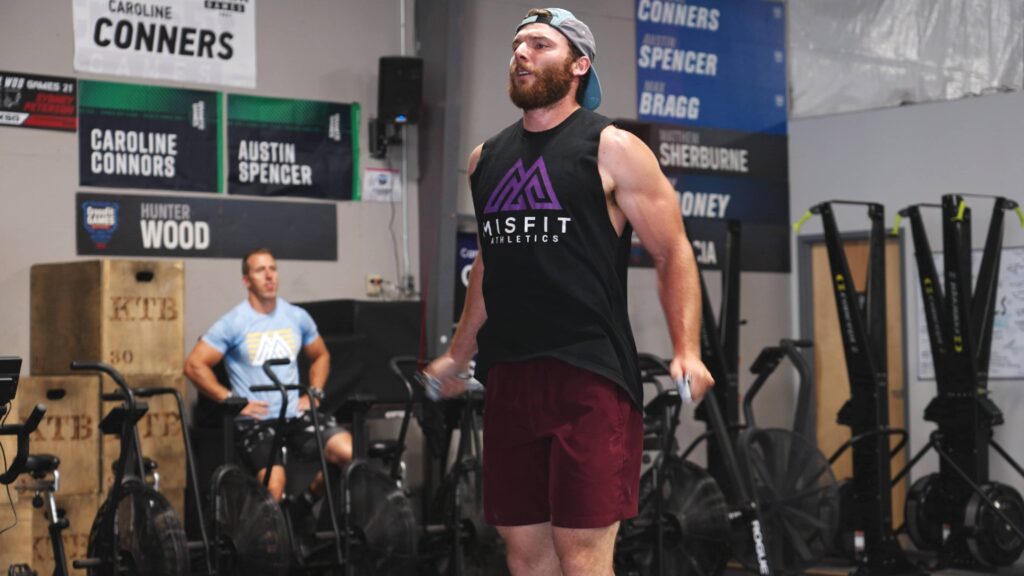
Start Your Crossfit Training Day The Right Way
Why does Misfit Athletics program Morning Movement for Crossfit athletes? Each day, Morning Movement will be the first thing you see in Misfit Athletics programming.…
June 9th. Seven weeks. Here’s exactly what we’re doing and why.
We do these breakdowns for two reasons. If you’ve been with us through OS one, this is your chance to hear the thought behind the new block, understand what’s changing, and get dialed in before Monday. If you’re new, consider this an audition. We don’t make decisions based on what’s trendy. We make them based on what works, what we’ve learned over years of running athletes through this sport, and where we need to take you to be ready when the season gets real.
Let’s get into it.
Two groups coming into OS two, and they’re thinking about it a little differently.
If you came through OS one, you’ve already done the recalibration work. You shook off the competition rust, got yourself back into a rhythm, and hopefully made some real decisions about what you actually enjoy and what you’ve been avoiding. That window is mostly closed now. OS two is where we start creating separation. Not the sexy kind. The productive kind. What does your body actually need to adapt? Strength? Aerobic capacity? The answer to that question should be driving every decision you make about which track you’re on for the next seven weeks.
If you’re jumping in fresh, either coming off a different program or wrapping up competition season, the conversation slides back toward what we talked about at the start of OS one. Work on your weaknesses, yes, but if everything is new, the hybrid approach is probably your best entry point. Get used to how we program, how we talk about things, and what the templates actually feel like before you go all in on the thing you’re worst at.
Either way, this is not the time to stomp on the volume gas pedal. We are building toward phase zero, where the volume stays intentionally low but the intensity is through the roof. And then things get real in phase one. Everything we do in these seven weeks is laying the foundation for that. Keep that perspective close.
Every athlete, regardless of track, shares one lift and one conditioning piece each day. That’s not an accident and it’s not a compromise. It’s one of the things I’m most proud of in how we build this program.
We don’t want you on an island doing your own programming with no one to talk to. And we don’t want a one-size-fits-all program that doesn’t account for who you are. The shared piece gives you community, leaderboard, strategy conversations, and a baseline everyone can reference. Everything else is how you personalize around it.
If you’re unsure where you fall, start with the open athlete template. One lift, one conditioning piece. Add a skill or an accessory on the days when you feel good and have the time. That’s the minimum viable version of this block, and for a lot of athletes it’s exactly right. The athletes who get confused are usually the ones trying to do two lifts, two conditioning pieces, and three skill progressions every day. There are other programs for that. This isn’t it.
Lift: Texas Method, Week One (Five Rep Max Back Squat)
If you’ve been here before, you know what this is. If you’re new, here’s what you need to understand.
Texas Method is a two-day-a-week squatting program. Day one, you find a five rep max back squat. Day five, you do five sets of five at 90% of what you found on day one. That’s the structure. What makes it work is the runway.
If you go for an absolute true max on day one week one and you’re a reasonably strong athlete, you’re going to have a rough go. The five by five at 90% is a session. It’s the real deal. What we’re looking for is landing on or near your old five rep max somewhere around week three to five, and then progressing from there. If you’re coming off competition season and just rejoining, week five is the rough target for getting back to where you were.
The mental side of this program is half the battle. You need lifting amnesia. You will have weeks where you’re convinced you can’t go heavier, and then going heavier feels easier than the week before. You will have weeks where a weight you’ve hit before feels impossible. Know that and prepare for it. Get into the right headspace, control what you can control, and let the program work.
If you’re very strong and the standard version isn’t doing enough, add tempo. Work more of the lift from your own strength and less from the bounce out of the bottom. The athletes who take that seriously are the ones whose back squats translate cleanly to the snatch, the front squat, the clean, the overhead squat. The carryover is massive, and it gets more obvious when we go heavy in phase one.
On the five by five day, rest three full minutes between sets. Minimum. If the weight is light enough that you don’t feel a need for that rest, you are the one who has to bring the intensity anyway. Move the bar faster. Drive into the ground with more purpose. The athlete who has 315 on their back has no choice but to push against it. If you have 155, you are the intensity. Own that. The bar moving 10 to 20 percent faster when you’re well-rested is what develops the fast twitch fibers. That’s what’s going to get you stronger. You don’t feel it the same way as the athlete grinding under a heavy bar, but it’s happening. Give it the rest it needs.
MetCon: Mandatory
A MetCon lives on day one. We are slowly, progressively adding more CrossFit to this block as we build through the year. That’s intentional. The translation from intervals and bitch work to an actual metcon is where learning happens. There are no built-in breaks in a MetCon. Learning how to execute in that environment is half the battle in this sport. The pacing, the decisions, the ability to hold positions when you’re tired. We are practicing that.
Lift: Positional Squat Snatch
The positional work here means standing the barbell up to the hip and then lowering to the designated position. Power position, mid thigh, at the knee. You stand it up, you lower to the position, and then you snatch from there.
If the weight is lighter and you’ve got your technique dialed, you don’t need to drop and reset every single rep. That option is in the instructions. The point is that this has nothing to do with grip or muscle endurance. We are not trying to make this harder through fatigue. We are trying to isolate positions and own them.
Conditioning: Intervals
Intervals are the bridge between your bitch work and your MetCons, and we need to use them that way. That means going faster in the interval than you would in a MetCon of the same movement. The whole point is to establish what you’re capable of when there’s adequate rest, and then have that ceiling inform how you compete when there aren’t breaks.
If you’re using intervals as an opportunity to go a little bit easier than a MetCon, you’re missing the entire point. Think about it like training for a mile run. You don’t sprint your sprints at mile pace. You go faster. Same concept here. Find repeatable efforts that are genuinely challenging. Use the rest periods to think about execution. Was that the right break point? Did I transition the way I wanted to? Was the pacing right? You have time to actually think during these, which you don’t have at 180 beats per minute in a MetCon. Use that window. It compounds into Athlete IQ.
Lift: Tempo Squat Clean
The biggest ego issue in the entire block, and I say that with love.
Tempo Olympic lifting is the thing that separates athletes who are technically sound at moderate weight from athletes who are technically sound when it matters. If you rush through the pull, you can hide a lot of faults. Downstream, those faults are costing you 20% of your lift. Tempo forces you to find them.
Slow from the floor to whatever position is called for. Three to four seconds to get there. Get there with positions you’re actually proud of, and then be aggressive when you’re asked to. The challenge is not surviving the slow part. The challenge is going through beautiful positions and then expressing real aggression at the right moment. If you’re speeding up before the designated position, you’re doing maintenance work, not technique work.
The limiters are intentional. More reps when the position is more accessible. Sets of five at power position. The limiter isn’t there to reduce the training effect. It’s there to force you to actually do the movement correctly instead of finding a workaround. Slow the hell down from the floor. Then get after it.
One more thing: we are doing Texas Method and we are squatting heavy twice a week. That is already translating to your clean even though it’s a back squat. This is the time to focus on the technique. Don’t show up to a tempo squat clean session with 80% of your max on the bar and then tell yourself it wasn’t a tempo lift.
Conditioning: Mandatory Aerobic Run and C2 Bike, Alternating Weeks
Running and C2 bike alternate as the aerobic bias through the block. You’ll get slightly more aerobic running than C2 bike this phase, by about one week. Stick to the plan and you’ll get 15 weeks of zone two and aerobic work across the full offseason. That does something real to the C2 bike specifically, which makes up somewhere between 30 and 50 percent of the sport in terms of leg-driven machine output.
Running is the ultimate expression. When you get to a CrossFit event with running in it, paired with something like a clean and jerk or a muscle up, you see exactly where everyone is relative to one another. There’s nowhere to hide. Getting good at running and then learning how to translate that to the CrossFit space is one of the bigger levers you have. Log the miles. Increase duration over time. Do not increase intensity.
Rest Day: Flush
Machines and mobility. Zone one. Warming up tissues, clearing the system, working through your go-to mobility routine. Not a workout. A genuine recovery tool.
Lift: Texas Method, Week One (Five by Five at 90%)
This is the second piece of the Texas Method structure. You take 90% of the five rep max you found on day one of this same week, and you do five sets of five at that weight.
You need to complete a successful lift on day one of any given week to execute this correctly. If you missed your rep max on day one, use the heaviest successful set of five you completed that day. We want you getting the five by five at 90% of what you actually found, not what you were hoping to find.
The five by five is the real deal once you’re into the middle and end of the block. Three full minutes of easy flush between sets on a one-damper bike is not optional at that point. It matters. People who shortchange the rest shortchange the adaptation.
Conditioning: Mandatory Interval
Same logic as day two. Use the rest periods to audit execution. Build toward your MetCon capacity. Go faster than you would in a MetCon.
Strength Bias Addition: Hang Power Snatch Rotation
We’re doing a three-session rotation on the hang power snatch this block, cycling through volume, technique, and heavy. The sessions are max unbroken, so read the instructions on that specifically.
A few people in OS one overestimated how much weight to use on the hang clean rotation and ended up doing two or three reps when we were looking for something much closer to ten or twelve. The snatch won’t have that issue quite as much since it’s not the heavier lift, but keep it in mind. We’re looking for you to be able to rep these out with speed and technique. If you’re grinding through very low reps, the weight is too heavy for what we’re building.
Lift: Heavy Strict Press
If you followed OS one and did the non-mandatory pressing work, you’ve been through volume work and velocity work. Now we’re bringing both of those elements to a place where we can actually go heavy with them.
Sets of five and sets of four. Bring the muscle endurance you’ve built and use it. That confidence is earned. If it feels genuinely heavy, get the damn thing over your head. If it doesn’t feel particularly heavy, speed is your answer. Move the bar fast. Every rep with intent. That speed is what builds pressing strength for the athletes where the bar isn’t pushing back hard enough on its own.
We are fixing your strict pressing and your upside-down stuff in the way that we can actually fix it. Not by snapping your fingers, but by building it correctly over time. If you want more context on that, the previous episode on pressing gymnastics goes deep on exactly this.
Conditioning: Build Gears Progression, C2 Bike and Run Bias
We’re flipping the order from OS one but staying on the same fundamental concept. These are repeat sessions from OS one, intentionally. If you were there, they’re benchmarks. If you’re new, they’re starting points.
The target is one to two seconds per split improvement on the C2 bike gear to gear, and roughly 15 seconds per mile on the run side. Progress like that doesn’t feel like much in a single week. Accumulated over seven weeks and then rolled into phase zero and phase one, it changes what you’re capable of.
Build pieces are anaerobic. Shorter windows, larger rest periods. Very physically demanding. Different animal from the aerobic work. If the aerobic side makes you mentally uncomfortable, the build side is going to make you physically uncomfortable. Both have a job.
Rest Day: Zone Two C2 Bike
45 minutes minimum for the working time. 90 minutes is where real aerobic development starts to accelerate. If you have the time and the ability to work up to 90 minutes, do it. You notice a significant difference in zone two adaptation when you log the actual hours. The people who were in OS one have already built volume here and can continue progressing that duration.
If you’re on the strength bias track, here’s what you’re adding. These slot in as lift two on the days they’re assigned, either every day on full strength bias or selectively on the hybrid approach.
Day One: Heavy Push Press
The push press is the bridge between the strict press and the jerk. Strict pressing develops raw strength. The jerk develops skill. The push press develops both, and it teaches you how to use the strength you’ve been building in your legs and midline to actually move weight overhead in a way that transfers to everything in CrossFit that ends with a lockout.
There are ways to cheat a push press that have no place in training for this sport. If you’re getting into positions you couldn’t split or push jerk from, you’re not doing a push press, you’re doing something else. Great front rack position. Feet wide enough for a stable base. Tuck the chin. Bar path up the face, head comes back to neutral as you go overhead. If you don’t know your one rep max push press, you’re going to have an opportunity to find out early in the block. Start conservative.
Day Two: Speed Deadlifts from Deficit
High execution demand. This is not just picking up a moderately heavy barbell a few times, although there’s some benefit even to that because of how heavy the deadlift is relative to other movements. What we’re actually after is pulling into tension before you pull.
Set your position. Pull the slack out of the bar until you hear the click and feel the barbell bend slightly. That’s the moment. Then drive your feet into the floor hard enough that the bar moves fast. Leg drive in the first pull, from the floor to the knee, is the whole point. Everything after that is physics.
The reason we do this from a deficit is that standing on a plate forces athletes to sit into the lift and find that leg drive in a way that pulling from the floor lets them avoid. If you can’t get into a good position from a deficit, do not pull from a deficit. That is a rule, not a suggestion. And just to be clear, pulling from blocks is the opposite of a deficit. Do not do that.
If you have the setup for velocity-based training with bands, this is a great application for it. Reach out and we can walk through how to set that up.
Day Three: Heavy Bench Press
Building healthier, stronger shoulders. The progression logic is the same as strict press. We end each session with an AMRAP set, which consistently works well for bench press progression and also gives us week-to-week information about where you’re at.
The percentage ranges are a range intentionally, because bench press technique varies more person to person than almost any other lift in terms of shoulder dominance, chest dominance, grip width, touch point. If a weight feels barely liftable, it’s probably too heavy for the working sets. Start at the lower end of the range and build from how that single feels.
Week one, day six example: one by one at 80%, three by five at 70 to 80%. Move through the lower end of that range earlier in the set, build toward 80% as you go, and that AMRAP at the end should feel like zero to one reps in reserve. That’s where we move the needle.
Day Five: Hang Power Snatch Rotation
Same three-session rotation as described above. Volume, technique, and heavy, cycling through the block. Read the instructions on the max unbroken sessions specifically. Weight selection matters. We’re looking for reps, not a grind.
Day Six: Heavy Power Clean
If you want to connect the dots between Texas Method squatting, tempo squat cleans, and actually cleaning heavier, the heavy power clean is the piece that rounds it out. Speed through the first, second, and third pull. Higher catch position. The polarization between slow and controlled on the tempo day and fast and aggressive on the power clean day is intentional and powerful.
These two sessions are three days apart in the week on purpose. We don’t want them feeling similar or looking similar. The space to recover from one and then execute the other as intended is part of the design. If you’re the kind of athlete who gets antsy without adding weight to the barbell, the power clean is your outlet. Use it.
If you’re on the conditioning bias track, here are the five pieces you’re adding in.
Zone Two Running (Day One)
I want everyone doing this. Even the people who think they don’t need it. Even the people who currently don’t think of themselves as runners. If you want to get better at running, you have to run. Zone two running. Increase duration over time. Do not increase intensity. Log the miles.
Justin LaSala has been to the CrossFit Games somewhere around nine years in a row. He’s a low volume, high intensity athlete by nature. He did the zone two running. He then voluntarily told me he just kind of needed to run and figure out how to run. That is a glowing review from Justin. If he can be convinced, so can you.
Power Output Machine Work (Day Two)
High effort, short windows, maximum output. This is one of the highest bang-for-your-buck pieces in the entire block if you need it. The concept is creating a large window of capability: if your ceiling is here and your zone two floor is here, shifting that whole window over changes what you’re capable of across all intensities.
It’s also incredibly expensive in terms of recovery, which is why it belongs on the conditioning bias track rather than in everyone’s program by default. If you genuinely need to develop power output or you’re specifically working on your engine, it’s worth it. If you’re already powerful and the priority is building aerobic capacity, this probably isn’t your addition this block.
The mental piece matters as much as the physical. If you’re a fast-twitch athlete, the place power output work puts you is not comfortable. The tendency is to start ruminating before you even start, which makes it worse. My rule is the same as my rule with the cold tub: if it’s on the schedule, I go do it. No thinking about it. Then you can find the version of it where you’re smiling through the last 10 seconds because it’s kind of funny how bad it is. That’s the goal.
Intervals (Day Three)
Same logic as the mandatory intervals. Additional conditioning day for the athletes who need the engine work. Same principle: go faster than you would in a MetCon, use the rest periods to audit execution, build Athlete IQ.
Aerobic Work, Alternating Weeks (Day Five)
This is a carry-forward from OS one, but with a specific progression. We’re alternating weeks between build and aerobic, running weeks one, three, five, and seven as aerobic and the others as build. The aerobic sessions are chopped to roughly two-thirds to three-quarters of the original OS one volumes. Same concept, shorter windows, meant to make the intensity more accessible and the buildup more manageable.
As an example: if OS one had 15 minutes of gear one, OS two might have 10 minutes of that gear, done three times to get 30 total minutes of volume. We’re working our way toward the full sessions so that when phase one arrives, these feel like something you can sustain rather than something you’re surviving.
One thing to watch on the build pieces in the shorter windows: it can be easy to go too fast when the session is shorter. We want you at the gear. One to two seconds per split improvement, 15 seconds per mile if it’s running. That progress should be spread across the whole session, not front-loaded. If the shorter window makes you feel like you have permission to race, you’re going to buy that adaptation forward and then run out of it.
MetCon (Day Six)
We’re biasing toward interval-based conditioning work this block because power output is interval-based and interval CrossFit is interval-based. The MetCon on day six rounds out the full picture. If you’re on conditioning bias, this is where pure CrossFit shows up in your week.
Accessories do not replace the meat and potatoes. If you only have time for a lift and a conditioning piece, you’re not doing accessory. Period. The accessories are designed to go with the lift and supplement it. They are not a replacement for the main event and they don’t get mixed and matched with conditioning pieces in place of lifting.
The athletes who get into trouble are at two ends of the same spectrum: the ones who do two lifts and two accessory pieces and skip conditioning entirely, and the ones who do two conditioning pieces and two lifts and never touch the accessory work. Find the sweet spot. When a lift is a major weakness for you, that lift and its accessory piece need to be happening together and you adjust the volume around them to make it possible.
In a perfect world, a high-end quarterfinal to low-end semifinal level athlete who wants to get stronger is doing two lifts, two accessory pieces, and a conditioning piece. That’s a long session. Know that going in and plan accordingly.
The accessory list this block:
Heavy sled push paired with neutral grip dumbbell bench. The sled push is your primary accessory, going slightly heavier. The dumbbell bench is your secondary, more volume-oriented.
Strict chest to bar pull-ups and high chest sandbag bear hug carry. The sandbag needs to be high enough that your upper back is doing real work to hold it there. When it’s leaned back on your hips and you’re waddling across the floor, that’s competition mode. In accessory work, that’s the wrong position. Get it up high. Think Pat Vellner’s upper back at any competition he’s attended. The shelf you’re building with strict chest to bar and sandbag carries is that shelf. Build it and then learn how to use it.
Heavy farmers carries, going heavier and shorter than OS one. Same progression logic, different direction.
Strict ring dips. I love to program these and dislike how most people execute them. Chest-forward, feet-way-back, barely-at-the-bottom is not the movement. Banded if necessary to control the tempo. Full range of motion. Slow on the way down. If you’re good at them and want to develop more mobility and connective tissue resilience, go a little lower in volume and slower in tempo, with real attention to the bottom position.
Deficit back rack reverse lunge. Barbell out of the rack, both feet on a weight plate. Reverse lunge where the lead leg stays on the plate and the back leg drops off. The lead leg, specifically the glute and hamstring, is doing the work to pull you back up. If you’re stepping back and then stepping forward like a split squat, you’ve missed it. Give yourself one to two weeks of real runway at lighter weight before you start loading this one. It is not easy for anyone and it will show up in your legs in ways you won’t expect.
Hand over hand sled pull, lighter and longer this block. Pulling endurance is a significant issue for a lot of athletes and this is one of the best tools we have for it. If your grip or your lats give out before your engine does on gymnastics movements, this is part of the fix.
Heavy kettlebell overhead carries, going heavier than OS one for shorter duration. Excellent overhead stability development. This is accessory work, not an event. Maintain excellent positioning every step.
Back extensions, moving as one unit within the upper body. Not the CrossFit Level One curl-down version and not the extreme hip extension version. Middle ground. Moving down and up together, not segmented. If you struggle with low back pain or have never learned how to properly engage your lower back, this movement is going to do more for you than you expect.
How to superset accessory work:
Pair the two accessory movements and alternate within the rounds. Traditional supersets. If you’re trying to build strength, do three total supersets, take about one minute between the two movements, and rest three minutes between rounds. If you’re trying to build muscle endurance or hypertrophy, do four total supersets, take 30 seconds or less between the movements, and rest two minutes between rounds. The shorter rest in the second version creates the limiter that forces you to use lighter implements and accumulate more volume. Both versions work. Pick the one that matches what you’re trying to get out of the session. Write it down so you don’t forget.
Choose one to three. Not four. Not five. They don’t all fit with the program and they don’t all work together. If you’re an open athlete, one to two is the right range. If you genuinely need the gymnastics work and you’re at a higher level, three is fine. Triage. The choices you make need to line up with each other and they need to be in order of importance, not in order of what you enjoy most.
Ring Muscle Ups, Misfit Sets
Four smooth sets with three minutes of rest, then one max set. The smooth sets need to actually be smooth. If you match or come close to your smooth set numbers in your max set, your smooth sets weren’t smooth enough. The goal is that the max set gets significantly more reps than any individual smooth set. That’s how you know the rest and the technique work in the smooth sets are doing their job.
If you did four smooth sets and then got eight, nine, ten, or more in the max set, you need to move up next week. Jump to fives. If you undershoot a little, that’s fine. If you got twice as many in the max set or more, you’re sandbagging your smooth sets.
Toes to Bar, Smooth Sets
This block we’re switching from Misfit sets to smooth sets on toes to bar. Six sets with clear progression over seven weeks. For athletes who already do a high volume of toes to bar, you can progress one to two sets per week rather than jumping the full range if that’s what the progression calls for. They still need to be technically sound smooth sets, not just making it through the reps.
Deficit Kipping Handstand Pushups, Misfit Sets
A magnifying glass on your timing and your positions. If your mechanics are off, the deficit is going to make that obvious very fast. The banana back version of the movement, that extra one to four inches of lockout is going to show you immediately whether you’re sliding up the wall through knee extension and hip opening or just pressing your way through.
Semifinals hopeful: four by two. Open athlete: three by one. If you genuinely struggle with handstand pushups: no deficit, just volume. The slight deficit from the last time we ran this didn’t produce the results I wanted from that group. We need volume to come out of these sets to get the adaptation. Enough reps to actually train the movement, not just survive it.
Wall Walks, AMRAPs
Six by 30 seconds rest 90 seconds to start, building over seven weeks toward three-minute AMRAPs with longer rest. If you’re good at wall walks, I want you moving fast from the beginning. Six by 30 seconds with 90 seconds rest is three minutes of wall walks across the session. If you’re fast, that’s a real number of reps. If you’re not fast yet, the AMRAP format gives you the volume without requiring a number you can’t hit.
The goal by the end of the block is three continuous minutes of wall walks, three times, with adequate rest. That’s a real challenge for a lot of athletes based on skill, strength, range of motion, all of it. Start where you are and build.
Bar Muscle Ups, Even Sets
Six rounds, one smooth even set. If it says smooth and you’re chicken-winging, favoring one hip, or squirming your way onto the bar, that is not the place for this work. In a MetCon where you have to get the rep done, do what you have to do. This is the place where you learn not to. The goal is to address rep one specifically. A lot of athletes get into a good position by rep two or three but their first rep is still a disaster. Fix rep one here.
Skill combined with volume over seven weeks is where real change happens in a movement like this. An athlete of Paige’s who went from an iffy set of five to six smooth sets of ten in an eight-week smooth set progression. That’s going from 30 to 60 reps in a skill session. Humility and linear progression. It’s a beautiful combination if you’ll let it work.
Seven weeks. Bare bones. These things work and they progress.
The athletes who show up to phase zero with a real five rep max back squat PR in their legs, real zone two hours in their engine, and real technique in their Olympic lifting are going to feel the difference. Not immediately. Over the course of the season, when it compounds into something that actually changes what they’re capable of on a competition floor.
Templates, the templating video, and the Excel version are coming in Telegram. If you’re unsure about which track to take or how to set up your week, post your situation in there and we’ll work through it together.
See you Monday.
– Drew
Questions on gymnastics work? We answer them daily in our free Telegram community. If you want to hear the full conversation, check out the Misfit Podcast: Listen / Watch
Session expired
Please log in again. The login page will open in a new tab. After logging in you can close it and return to this page.