A CrossFitter’s Guide to Accessory Work
There’s a version of accessory work that makes you significantly better at CrossFit. And there’s a version that is, to put it plainly, a complete waste of time.
The difference isn’t the movements. It’s not the rep schemes or the equipment. It’s the understanding behind all of it. What you’re trying to accomplish, why it belongs in your program, and how to execute it in a way that serves the rest of your training instead of competing with it.
We’re deep into base building season, which makes this the right time to go down the rabbit hole on something that gets brushed over way too often. So let’s get into it.
What Accessory Work Actually Is
In our context, accessory work refers to supplemental training designed to support, reinforce, or build toward the main adaptation of the current training day or phase, without interfering with it.
Read that second part again. Without interfering with it.
That’s the whole game. We are not trying to make your training harder. We are trying to make you better at the things you’re already working on. The goal is to accumulate a very high quality volume that aids the priority versus competing against it.
What we’re specifically after: building and solidifying positioning, building and solidifying movement patterns, and manipulating the tissues that this sport relies on heavily. Your grip failing mid-workout. Your posterior chain not contributing the way it should. Your quads and hips burning out earlier than your competition. Your pressing capacity hitting a ceiling that never seems to move. Accessory work, done well, is the thing quietly addressing all of that in the background.
I often describe it as the Zone 2 of strength work. We lower the intensity. We raise the volume. And we demand absurdly high quality in return. That last part is what separates the accessory work that moves the needle from the accessory work that just fills up your training log.
Free time is not impressive. Neither is junk volume. But quality supplemental work that you actually understand? That’s a different conversation entirely.
How We Think About Programming It
There are two categories of accessory work in our programming, and understanding the difference changes everything about how you approach it.
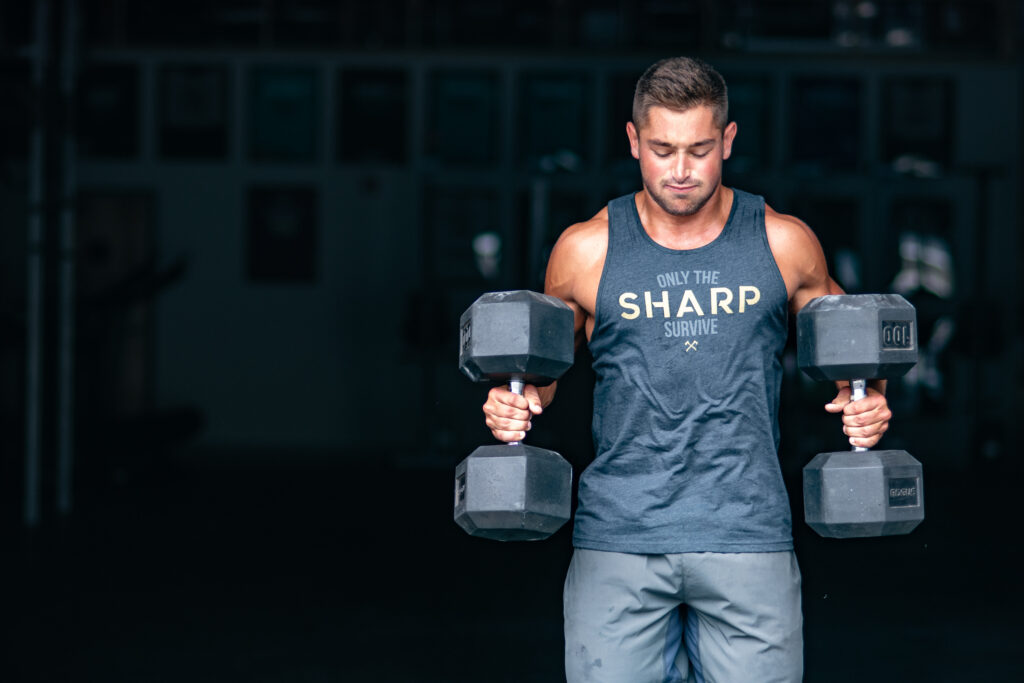
Primary accessory is your closest approximation to true strength building within the accessory world. This is where we’re trying to move the needle on your bench press, strict press, deadlift, back squat, over a longer period of time. We typically run these as six rounds of even sets with two minutes of rest. Even sets mean you pick a weight and you stay there. Not 20, 30, 40, 50, 60 pounds across six sets while you figure it out. You figure it out, pick a weight, and run it.
The two-minute rest isn’t arbitrary. The research supports it, and it forces compliance. One of the most common things I see with athletes new to this style of work is the ramp-up game: six warm-up sets masquerading as a working progression. If you only have two real sets in there, that’s a great warm-up and not much else.
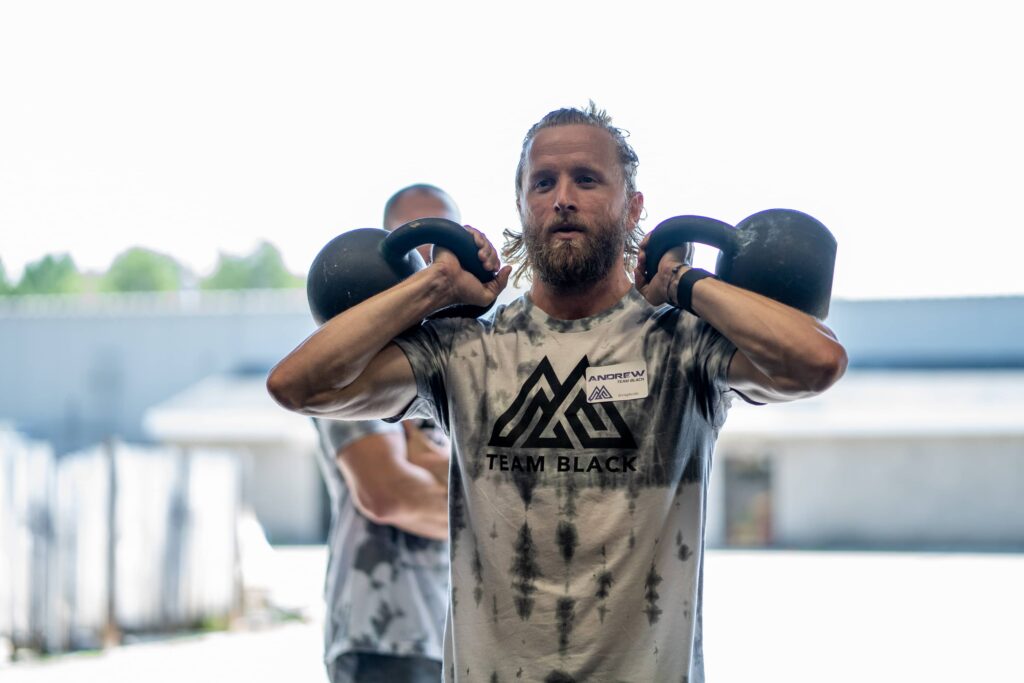
Secondary accessory is a full step back from that single-rep intensity. The challenge here isn’t any one rep. It’s the accumulation. Five rounds of a sled pull. Seven minutes of a double kettlebell overhead carry. The thing that makes secondary accessory hard is doing it for the duration, not how hard any single moment feels. Good secondary accessory feels like a deep burn that you don’t really want to sit with, but you could. You just don’t want to. That’s the target.
The intent changes with the time of year too. In the off-season, primary accessory can be used aggressively. You’re building, adding muscle, moving the needle on absolute strength. Deep in competition prep, the weight comes down and the purpose shifts toward protecting the tissues you’re hammering in conditioning. Preventative maintenance versus development. Both are valuable. They just aren’t the same thing.
The Runway Concept
This is probably the single most important idea when it comes to actually progressing through accessory work, and it’s the one that almost everyone gets wrong.
I have a graphic I use with remote athletes called the ramp. Think about the massive mega ramps from X Games skateboarding. The rider has to fly down that enormous hill just to generate the speed to launch off the jump. Take away the runway and you’re not launching anywhere. You’re just rolling off a curb.
What too many coaches and athletes do is start accessory progressions right at the edge of their capability and stay there. They go heavy in week one, grind through weeks two and three, maybe add a tiny bit of weight, and eight weeks later they’re basically where they started. Frustrated. Wondering what’s wrong with them.
What good progressions do is give you a runway. Start significantly lighter than what you think you can do, so that your muscles can accumulate volume, your connective tissue can adapt, and the smaller supporting muscles that are inevitably behind can get on board. If you want to be doing 70-pound dumbbell bench press in week eight, you might need to start with 50s and not feel particularly challenged for the first three or four weeks.
This is a hard sell for a CrossFitter. You like lifting. You want to go heavy. The patience required to trust a light starting point over a longer timeline runs directly against the wiring of most people in this community. But I’ll tell you what I know for a fact from years of watching progressions play out: the athletes who start with real runway end up significantly stronger than the athletes who started heavier and stayed there.
I fall into the same trap. Being a fast-twitch athlete, everything feels manageable in sets one through four. So I go too heavy too soon and I stay in the same place for months. Every time I’ve actually backed off and built the runway properly, those are the progressions where I end up somewhere I didn’t think I could reach. It’s easier to give this advice than to take it. I’m aware of that. But I’ve seen it work too many times to keep ignoring it for myself.
The concept of junk volume gets thrown around a lot, and I understand why it bothers people. But junk volume isn’t about the movements. It’s about the execution and the intent. An athlete who doesn’t understand what they’re trying to accomplish, why the weight they’re using is appropriate, or how to connect the movement to the skill it’s supposed to develop is doing junk volume regardless of how sophisticated the movement looks. And an athlete who does understand all of those things and executes accordingly is doing some of the most valuable work in their entire training week.
How to Actually Execute It
Range of motion is non-negotiable. Full, long range of motion on every rep, every set. Not the bodybuilder barely-lockout version. Not the dumbbell-to-the-ear version. All the way. This is going to limit how much weight you can use, and that’s the point. A lot of athletes who struggle with strict handstand pushups fall onto their head at the bottom because they don’t have contractile strength in that end range. You build that strength by training through that range, not around it.
Eccentric loading matters. Control the weight on the way down. This is where connective tissue adaptations happen. It’s also what keeps you healthy over a long training career. Speed matters in both directions but for different reasons. A controlled eccentric and an intentional concentric produce very different adaptations, and you want both in your toolbox.
Skill transfer is everything. There are so many movements in CrossFit where how you do the accessory version directly determines whether it helps you in competition. If you want your back squat to transfer to your front squat, your overhead squat, your snatch, you need to squat in a way that’s consistent with those positions. If you want your strict pulling to help your bar muscle-up, you can’t be leaning back and pulling with your biceps in a close grip. If you go into a bad position on your strict press, you’re going to take that position into your push jerk and wonder why the bar isn’t moving.
Move in accessory work exactly the way you want to move when it counts. The body learns what it practices.
Ego is the enemy. The biggest mistake I see in accessory work is ego. The weight jumping: 20s, 30s, 40s, 50s, 60s across six sets. Failing reps. Starting too heavy and leaving yourself no runway. For primary accessory, the goal is challenging but never failing. If you’re failing reps regularly, the weight is too heavy and you’re not building anything useful. Make it harder by slowing down the eccentric or holding the contraction. Not by loading weight you can’t actually control.
Volume is earned. This one catches people off guard. Even though the intensity is lower, accessory volume has a real cost. If you don’t have a very high level of general physical preparedness, two accessory pieces per day on top of your primary lifting and conditioning is likely too much for your body to handle and still get quality work out of everything. Build it gradually. One piece before two. Two before three. Respect the accumulation.
Be a sophisticated meathead. If you go watch Chris Bumstead videos and pay attention to his range of motion at that size, you’ll quickly realize that the people who are really elite at bodybuilding-style work aren’t using half reps and bad positioning. They have extraordinary control. CrossFitters can absolutely learn from this. The difference between the accessory work that moves the needle and the accessory work that doesn’t is almost always in the quality of execution, not the quantity of weight. Stop being anti-bodybuilder when they’re doing this part better than you.
The Big Picture
Accessory work isn’t going to make you better at CrossFit in isolation. There’s no magic happening in a corner of the gym with a pair of dumbbells. It is one small piece of a very large puzzle.
But here’s what it does: it gives you the tools to lift heavier through strength, technique, and muscle endurance. And it increases your output in workouts. That second part is where the real value compounds. Think about the hardest workout you’ve done recently, the one where your limiting factor wasn’t your will to keep going, but your body’s ability to execute. If that workout becomes doable because you addressed a specific weakness in the off-season, you’re now making significantly higher adaptations from that workout than you were before. The ceiling of what your training can do for you rises every time one of those limiting factors gets handled.
That’s where competitive CrossFit programming split from general fitness programming a long time ago. Not because we discovered some secret movement or radical approach to intensity. Because we figured out what was actually holding athletes back and built targeted systems to address it.
Accessory work, done right, is one of those systems. The sophistication isn’t in the movements. It’s in the understanding of why you’re doing them, the humility to use appropriate weights, the patience to build real runway, and the discipline to execute with the kind of quality that makes the whole thing worth doing in the first place.
You’ve put in the work in the shadows. Now give the supplemental work the same respect.
– Drew
Questions on accessory work? We answer them daily in our free Telegram community. If you want to hear the full conversation, check out the Misfit Podcast: Listen / Watch